
Hangbo Alloy Group
Shanghai · Est. 2012
Monel 400 and Monel K-500 share the same nickel-copper corrosion resistance but are not interchangeable: K-500 adds aluminium and titanium to age-harden to roughly double the strength. This guide shows when each fits, the procurement traps, and how to verify aged K-500.
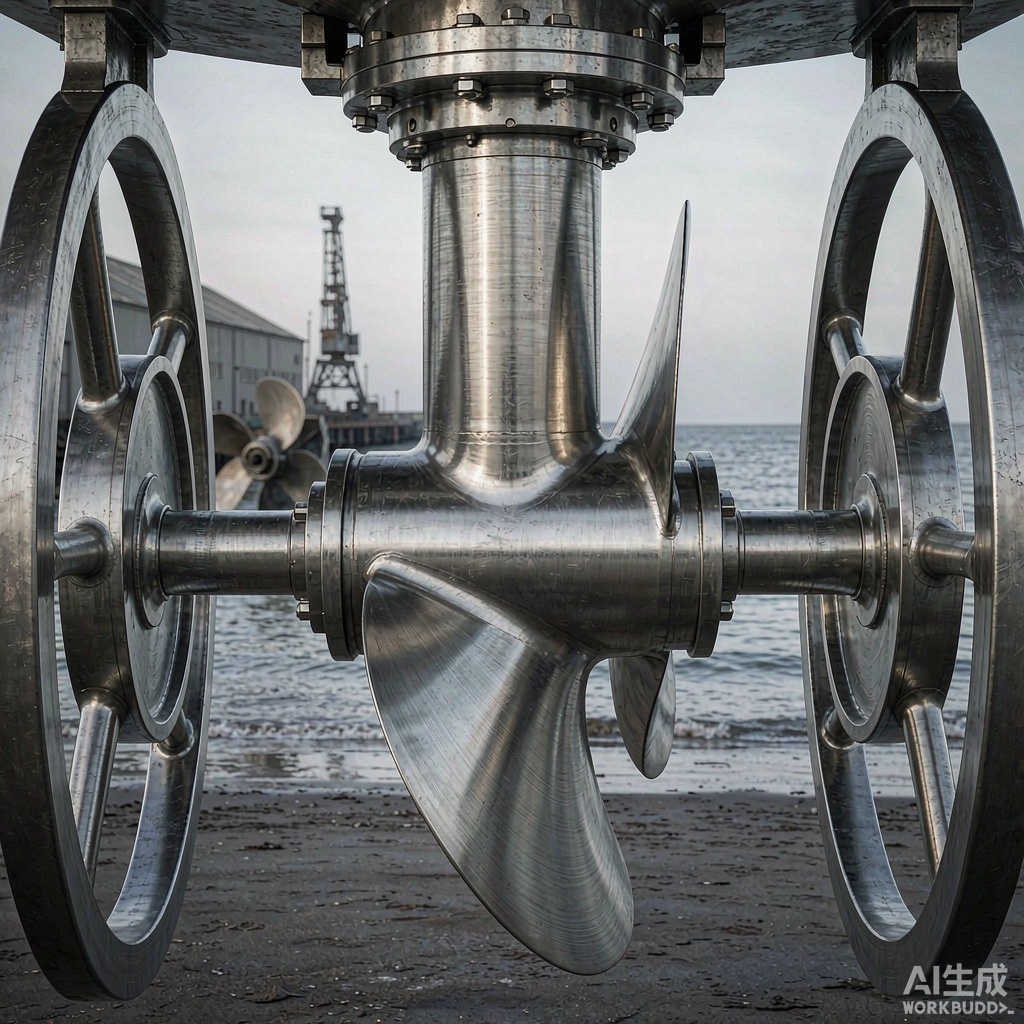
Quick answer: Monel 400 and Monel K-500 are both nickel-copper alloys built for seawater and corrosive service, but they are not interchangeable. Monel 400 is a solid-solution alloy whose strength comes only from cold work, while Monel K-500 gains roughly double the yield and tensile strength from an age-hardening heat treatment that precipitates a gamma-prime phase. Choose 400 when you need maximum ductility, formability and freedom from age-hardening distortion; choose K-500 when a shaft, fastener or valve part must resist high mechanical loads or galling without growing in size.
Buyers lose money on this choice in two opposite directions. Specifying K-500 for a part that only needed 400’s corrosion resistance adds cost, weld sensitivity and a heat-treatment verification burden you did not need. Specifying 400 for a high-load shaft or bolt lets the part yield, gall or fail in service even though the chemistry certificate looked correct. The chemical analysis on a mill test certificate cannot, by itself, tell you whether the K-500 you received was actually aged — that gap is exactly where substitution hides, and this guide shows how to close it.
At Shanghai Hangbo Alloy Group we melt both grades from 100% virgin nickel and copper feed, refine by vacuum induction melting (VIM) followed by electroslag remelting (ESR) or vacuum arc remelting (VAR) to keep tramp elements low, strip the oxide scale thoroughly before working, and finish with the exact annealing or ageing cycle the specification names. Each heat is analysed by spectrometry plus wet chemistry, mechanically tested and dimensionally inspected before it ships, so the condition you order is the condition you can re-verify on arrival rather than trust on paper.
Quick answer: The single metallurgical difference is that K-500 carries roughly 2.3–3.2% aluminium and 0.35–0.85% titanium on top of the 400 chemistry; those minor additions let the alloy age-harden by precipitating a hard gamma-prime (Ni₃(Al,Ti)) phase, whereas 400 has no such strengthening mechanism and relies only on solid-solution and cold work.
Both alloys share the same nickel-copper backbone — about two-thirds nickel, one-third copper, with small iron and manganese — which is what gives the family its famous resistance to flowing seawater, brine and a wide range of non-oxidising acids. That shared corrosion behaviour is precisely why people assume the two grades are “the same metal, different price.” They are not. Remove the aluminium and titanium from K-500 and you are left with something very close to 400 in the solution-annealed state; add them back and age the material, and the yield strength climbs from the 200–300 MPa range to well past 700 MPa.
The practical consequence is that 400 is the ductile, easily formed, easily welded workhorse, while K-500 is the high-strength variant that must be heat-treated into its hard condition and verified there. Age hardening is also accompanied by a small but real dimensional change and by increased sensitivity to hydrogen pickup and welding heat, so the “upgrade” to K-500 is never free. Our age-hardening guide explains the precipitation mechanism in more depth for buyers who specify other precipitation-hardened alloys.
Quick answer: The two grades carry the same UNS root chemistry except that K-500 (UNS N05500) adds 2.3–3.2% aluminium and 0.35–0.85% titanium and tightens the sulphur maximum; if a certificate omits aluminium and titanium, you are almost certainly looking at 400, not K-500.
| Element | Monel 400 (UNS N04400) | Monel K-500 (UNS N05500) |
|---|---|---|
| Nickel | 63.0 min (balance) | 63.0 min (balance) |
| Copper | 28.0–34.0% | 27.0–33.0% |
| Iron | 2.5% max | 2.0% max |
| Manganese | 2.0% max | 1.5% max |
| Carbon | 0.30% max | 0.25% max |
| Silicon | 0.50% max | 0.50% max |
| Sulphur | 0.024% max | 0.010% max |
| Aluminium | not specified | 2.30–3.15% |
| Titanium | not specified | 0.35–0.85% |
The figures above are the compositional limits most commonly cited from ASTM B127/B164 (for 400) and ASTM B865 (for K-500); always confirm the exact edition and product form on your purchase order. Because aluminium and titanium are the only meaningful differentiators, a chemical check that reports both — and reports them in the K-500 range — is the first evidence that the material is genuinely K-500. A certificate that lists only the 400 elements for a “K-500” line item is a red flag worth stopping on.
Quick answer: In the soft condition the two grades overlap, but properly aged K-500 typically shows about twice the yield and tensile strength of annealed 400 and a hardness near 270–320 HB versus roughly 110–140 HB for 400 — which is why a simple hardness check is the fastest way to confirm K-500 was actually aged.
| Property (typical, not guaranteed) | Monel 400, annealed | Monel K-500, age-hardened |
|---|---|---|
| Tensile strength | ~550 MPa (80 ksi) | ~1100 MPa (160 ksi) |
| 0.2% yield strength | ~240 MPa (35 ksi) | ~760 MPa (110 ksi) |
| Elongation | ~40% | ~18% |
| Hardness | ~110–140 HB | ~270–320 HB |
| Density | 8.44 g/cm³ | 8.44 g/cm³ |
These are orientation values for comparison only. The numbers that govern your acceptance are the minimums written on the EN 10204 certificate and the governing ASTM specification for the product form, and those minimums vary with diameter, section and temper. The decisive point for procurement is the hardness and strength gap: a K-500 that arrives un-aged — solution-annealed but never precipitated — will read close to 400 on a hardness tester, so it will pass a chemistry-only inspection while failing every strength requirement you bought it for. The procurement pitfalls buyer’s guide collects the purchase-order clauses that make a certificate like this trustworthy and auditable.
Quick answer: Reach for 400 whenever the part is shaped, formed, heavily cold-worked or only needs corrosion resistance and moderate strength; reach for K-500 when the part must carry high mechanical load, resist galling or survive a high-strength fastener or shaft duty that 400 simply cannot meet.
| If your part is… | Usually choose | Why |
|---|---|---|
| Heat-exchanger tubing, condensers, tanks, piping | Monel 400 | Corrosion resistance is the demand; 400 is more formable and weld-friendly |
| Deep-drawn or heavily cold-formed component | Monel 400 | No age-hardening step, no distortion, better ductility |
| Marine propeller or pump shaft | Monel K-500 | High strength plus cavitation/erosion resistance |
| High-strength bolts, nuts, valve stems | Monel K-500 | Load-bearing strength 400 cannot reach |
| Non-sparking tools | Monel K-500 (or 400) | K-500 where wear resistance matters; 400 where forming matters |
| Fasteners in a galling-prone joint | Monel K-500 with anti-galling treatment | Harder surface resists seizure, but needs lubrication/coating |
The decision is rarely about corrosion — both resist seawater well — and almost always about mechanical load and formability. When in doubt about an offshore or subsea duty, our offshore and subsea selection guide places these two alloys against the other candidates for that environment so the choice is documented rather than guessed.
Quick answer: The three ways this comparison turns into a loss are (1) K-500 shipped solution-annealed but never aged, (2) the grade or condition swapped on the certificate, and (3) K-500 fasteners that gall in service because the harder alloy was assembled without anti-galling care.
| Failure mode | How to detect it | How to prevent it |
|---|---|---|
| K-500 delivered un-aged (soft) | Hardness test reads ~120 HB, not ~300 HB; no ageing cert | PO requires aged condition, heat-number ageing cert, incoming hardness check |
| Grade or UNS swapped | PMI plus chemistry shows no Al/Ti on a “K-500” line | PO names UNS N04400 or N05500 and condition; verify chemistry on the MTC |
| K-500 galling in a joint | Seized threads, torn flanks on disassembly | Anti-galling coating, controlled fit class, slow assembly, lubrication |
| Age-hardening distortion | Oversize machined part, rework loops | Machine after ageing or allow stock; PO states sequence and tolerance |
| Hydrogen pickup on strong K-500 | Delayed cracking after pickling/plating | Bake-out clause; see our hydrogen-embrittlement coverage |
None of these failures shows up on a chemistry-only certificate, which is why the corrosion resistance that both grades share becomes a convenient disguise for a strength or condition swap. The procurement pitfalls guide collects the cross-cutting purchase-order clauses that close the rest of these gaps, but for Monel specifically the hardness check and the explicit ageing requirement do most of the work.
Quick answer: Monel 400 is covered by ASTM B127 (plate/sheet/strip), B164 (rod/bar/wire) and B165 (seamless tube); Monel K-500 by ASTM B865 (rod/bar/forgings), B864 (welded tube) and B829 (seamless pipe/tube); both reference UNS N04400 and N05500, and welding uses ERNiCu-7 / ENiCu-7 consumables per AWS A5.14.
| Document | Covers | Note for buyers |
|---|---|---|
| ASTM B127 | Monel 400 plate, sheet, strip | Names annealed tempers and mechanical minimums |
| ASTM B164 | Monel 400 rod, bar, wire | Covers hot-finished, cold-drawn, annealed |
| ASTM B165 | Monel 400 seamless tube | Seamless pipe and tubing |
| ASTM B865 | Monel K-500 rod, bar, forgings | Defines the age-hardened condition |
| ASTM B829 / B864 | Monel K-500 seamless / welded tube | Tube forms of K-500 |
| AWS A5.14 | ERNiCu-7 welding wire | Matching filler; covered in our Monel welding-wire guide |
| EN 10204 | Type 3.1 / 3.2 certificate | Governs what the MTC actually declares |
Monel is a registered trademark of Special Metals Corporation; the alloys here are defined by their UNS numbers and the ASTM standards above. Always cite the UNS and the ASTM product standard with its edition year on the order, because temper definitions and tolerances have shifted between revisions and “Monel” alone is not a specification.
General references: Nickel Institute · AMPP · SAE International · ASTM International
The decisive difference is metallurgical: K-500 adds about 2.3–3.2% aluminium and 0.35–0.85% titanium over the 400 chemistry, which lets it age-harden into a much stronger condition, while 400 is a solid-solution alloy strengthened only by cold work. Both resist seawater and many acids similarly, so the choice is driven by mechanical load and formability rather than by corrosion resistance. If a certificate for “K-500” shows no aluminium and titanium, you are almost certainly holding 400.
Yes, substantially. Properly age-hardened K-500 typically shows a tensile strength around 1100 MPa (160 ksi) and a yield near 760 MPa (110 ksi), against roughly 550 MPa (80 ksi) tensile and 240 MPa (35 ksi) yield for annealed 400 — about a two-fold gain in strength and a hardness jump from ~120 HB to ~300 HB. These are typical orientation values; your enforceable numbers are the minimums on the EN 10204 certificate and the governing ASTM product standard. The strength is exactly why K-500 must be verified as aged rather than assumed.
No. K-500’s strength comes with lower ductility, an age-hardening step that can distort parts, greater sensitivity to hydrogen pickup, and a higher galling tendency in threaded joints, so it is the wrong call for heavily formed, deep-drawn or welded-without-care components. It is the right call for high-load shafts, bolts, valve stems and pump parts where 400 would yield or gall. The selection table above maps each duty to the correct grade rather than defaulting to the stronger one.
The fastest check is hardness: properly aged K-500 reads roughly 270–320 HB, while an un-aged (solution-annealed-only) piece reads close to 400 at ~120 HB. Back that with the heat-number ageing certificate called out on the order, and confirm the chemistry reports aluminium and titanium in the K-500 range. The procurement pitfalls buyer’s guide explains the purchase-order clauses that make a result like this auditable before you accept the shipment.
K-500 galls more readily than 400 because its higher hardness and work-hardening rate make threaded and closely fitted surfaces seize under load without lubrication. The mitigation is standard for high-strength nickel alloys: control the fit class, use an anti-galling coating or solid lubricant, assemble slowly, and avoid mixed hard-on-hard contacts. Specify the anti-galling treatment explicitly on the purchase order, because it is not implied by the grade alone.
Both are welded with matching nickel-copper filler — ERNiCu-7 wire or ENiCu-7 covered electrode per AWS A5.14 — and both need the usual nickel-alloy discipline of clean joints, low heat input and controlled interpass temperature. K-500 adds caution because its aluminium and titanium raise hot-cracking sensitivity and because welding can soften the age-hardened zone, so post-weld ageing or welding in the annealed condition may be required. Our nickel-alloy welding guide and Monel welding-wire guide cover the procedure details buyers should reference.
Name the UNS (N04400 or N05500), the ASTM product standard with edition, and the exact condition (annealed or age-hardened) on the order; for K-500 require a heat-number ageing certificate and an incoming hardness check; require EN 10204 3.1 or 3.2 with full melt traceability; and add clauses for anti-galling treatment, fit class and welding procedure where relevant. Vague “Monel as required” language is the loophole substitution hides in, so the clauses must be specific and auditable.
Choosing between Monel 400 and K-500 is a duty-and-condition decision, not a brand decision, and the cost of guessing shows up only after the part is in service. Tell us the form, the load, the corrosive environment and whether the part will be formed, welded or threaded, and we will melt from 100% virgin nickel and copper feed, refine by VIM plus ESR or VAR, and deliver the exact annealed or age-hardened condition your specification names — with chemistry, hardness and mechanical results you can re-verify on arrival.
Email: [email protected]
Phone: +86-136-1165-6360
WhatsApp: +86 13611656360
Send us the form, the mechanical load, the corrosive environment and whether the part will be formed, welded or threaded, and we will recommend the correct UNS and condition, melt from virgin feed, refine by VIM plus ESR or VAR, and supply the exact annealed or age-hardened material with hardness and mechanical results you can independently verify, plus the heat-number traceability your inspector can re-check.