
Hangbo Alloy Group
Shanghai · Est. 2012
The high-chromium, hot-corrosion-resistant cast superalloy for gas turbine blades and vanes, supplied as master alloy ingot or precision investment castings with full heat traceability.
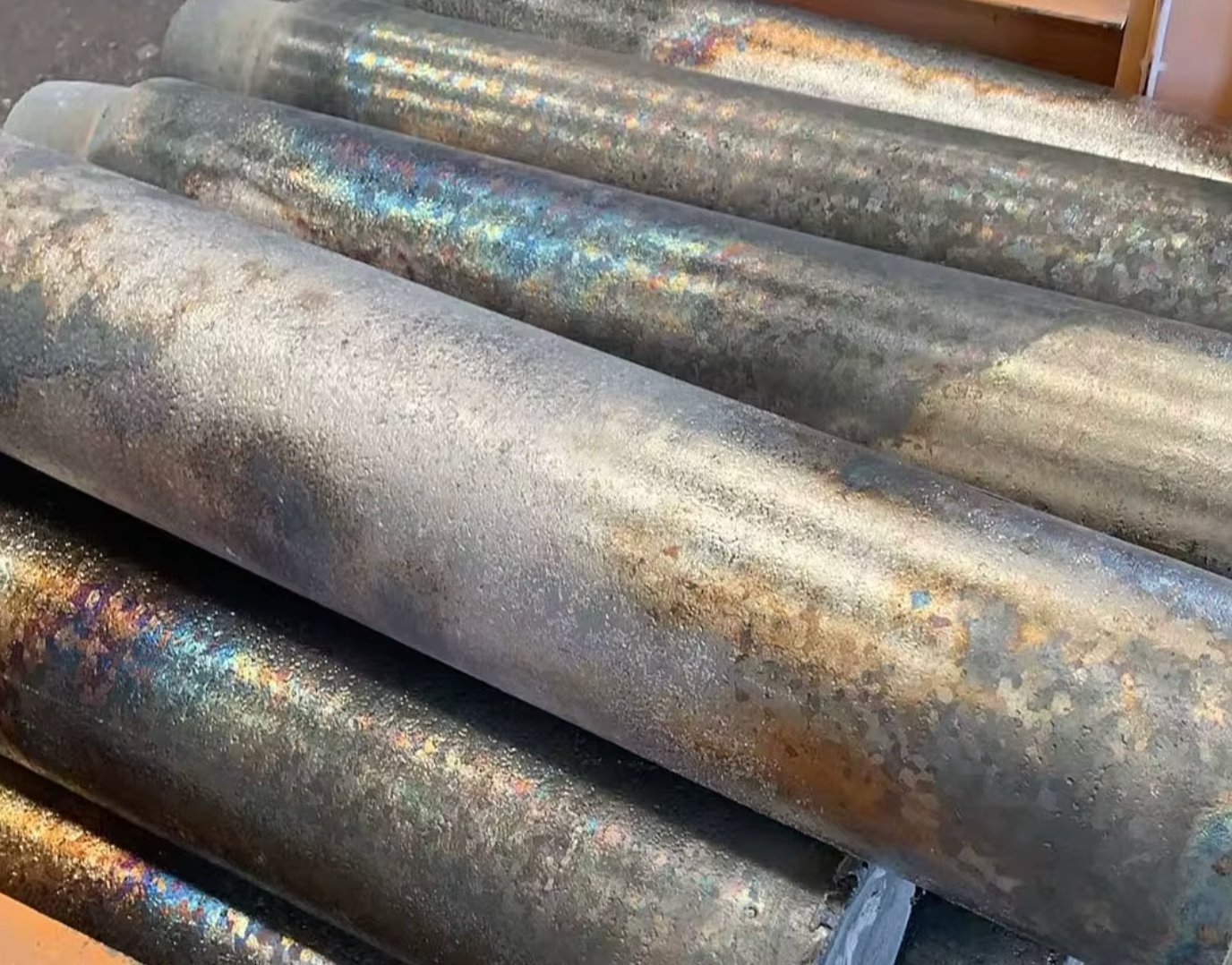
Inconel 738LC (IN-738LC) is a precipitation-hardened nickel-base cast superalloy developed specifically for the gas turbine industry, where a blade or vane must hold creep-rupture strength to about 980 °C while surviving long exposure to hot, sulphurous, salt-laden combustion gases. Its roughly 16 % chromium — much higher than most high-strength cast superalloys — combined with cobalt, tungsten, tantalum and molybdenum gives it hot-corrosion (sulphidation) resistance substantially better than Inconel 713C, at comparable creep strength.
The “LC” denotes the low-carbon, low-zirconium version, which improves castability in large section sizes without a meaningful loss of tensile or stress-rupture properties. Like the IN-713 family it is a cast-only alloy produced by vacuum induction melting and vacuum investment casting. Hangbo Alloy supplies it as master alloy ingot and as near-net-shape precision castings for blades, vanes and hot-section hardware.
Inconel 738LC is supplied to AMS 5410 for investment castings, and to ASTM B637 where master alloy or remelt stock is specified. The high-carbon version of the same family is IN-738C; the low-carbon, low-zirconium IN-738LC is preferred for large-section castings where castability and crack resistance matter. Standard heat treatment is a solution anneal at about 1121 °C (2050 °F) for 2 hours, air cool, followed by ageing at about 843 °C (1550 °F) for 24 hours, air cool.
Because the alloy is used almost entirely in rotating and stationary hot-gas-path parts, radiographic (RT) and fluorescent penetrant (FPI) inspection are standard on rotating components, and hot isostatic pressing (HIP) is available to close porosity and raise fatigue life.
| Element | Ni | Cr | Co | W | Mo | Ta | Nb (Cb) | Al | Ti | C | Zr | B |
|---|---|---|---|---|---|---|---|---|---|---|---|---|
| Range (wt%) | Bal | 15.7–16.3 | 8.0–9.0 | 2.4–2.8 | 1.5–2.0 | 1.5–2.0 | 0.6–1.1 | 3.2–3.7 | 3.2–3.7 | 0.09–0.13 | 0.03–0.08 | 0.007–0.012 |
Reference chemistry for IN-738LC (low-carbon, low-zirconium), with Al+Ti held to 6.5–7.2 wt% and Fe ≤0.05, Mn ≤0.02, Si ≤0.30, S ≤0.015. Individual heats are certified on the mill test certificate.
| Property | Value (solution + aged) |
|---|---|
| Tensile strength, room temperature | ≈1100 MPa |
| Yield strength (0.2%), room temperature | ≈800 MPa |
| Elongation, room temperature | 3–5% |
| Tensile strength, 870 °C | ≈750 MPa |
| Hardness | ≈375 HB |
| Service temperature limit | ≈980 °C |
| Density | 8.2 g/cm³ |
| Melting range | 1260–1340 °C |
| Magnetic | Non-magnetic (austenitic) |
Master alloy ingot. Vacuum induction melted remelt stock and foundry ingot, with chemistry certified against AMS 5410 and the customer's own specification, for foundries running investment-casting or directional-solidification lines.
Precision investment castings. Near-net-shape castings produced from your CAD or pattern, in equiaxed grain or directionally solidified (DS) structure. Typical parts are gas turbine blades and nozzle guide vanes, shrouds, combustion-section components and hot-section structural castings with internal cooling passages.
Post-processing. Hot isostatic pressing to close porosity, radiographic and fluorescent penetrant inspection on rotating parts, and controlled-window machining of castings with carbide and PCD tooling.
Every shipment carries an EN 10204 3.1 mill test certificate stating heat number, full chemical analysis including chromium, cobalt, tungsten, tantalum, boron and zirconium, the heat-treatment cycle and tensile plus stress-rupture results. EN 10204 3.2 independent verification and third-party inspection through BV, SGS, TUV or DNV are available. Our quality system is certified to ISO 9001:2015 and GJB 9001C, and master alloy can be held against your release schedule so casting runs never wait on material.
Send us your casting drawing or master alloy specification — grade, weight, quantity and any DS or HIP requirement — and our team responds within 10 minutes during business hours.