
Hangbo Alloy Group
Shanghai · Est. 2012
What does age-hardening actually do to a nickel alloy?
Age-hardening first dissolves strengthening elements at high temperature (solution anneal) and then holds the part at a lower temperature so a fine precipitate — gamma-prime or gamma-double-prime — forms inside the grains, raising strength and hardness far above the soft, solution-annealed state. The strength you bought exists only after that second step is completed within its temperature-and-time window, which is why the step must be verified rather than assumed from the chemistry.
Age-hardening (precipitation hardening) is what turns several nickel alloys into their high-strength condition, and it is also one of the easiest heat treatments to skip, shorten or overdo. This guide shows how to verify the cycle from certificate, hardness, microstructure and furnace records.
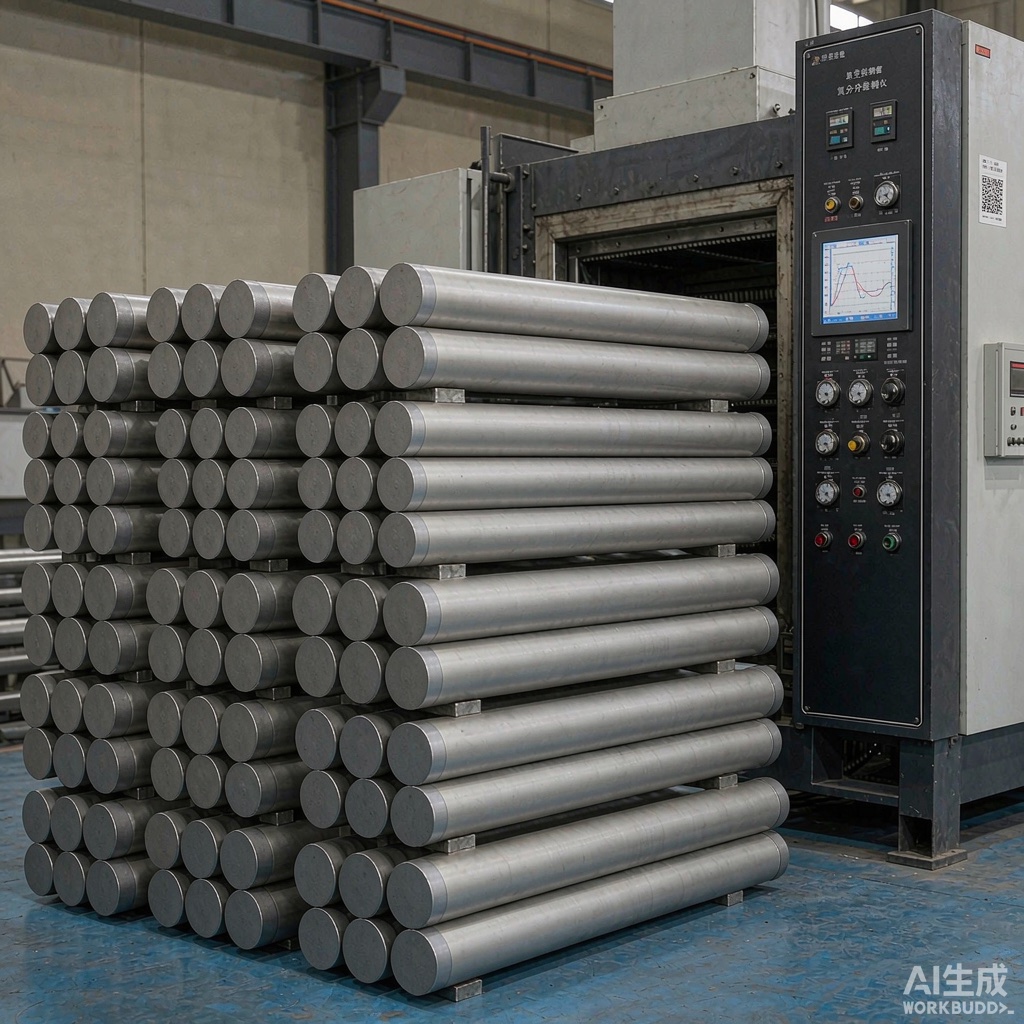
Quick answer: Age-hardening (precipitation hardening) is the two-step heat treatment — solution anneal followed by a controlled age — that gives several nickel alloys their high-strength condition, and it is also one of the easiest treatments for a supplier to skip, shorten or overdo without the chemistry certificate ever showing it. You verify it by combining the declared condition on the certificate, an incoming hardness and tensile check, a microstructural confirmation of the precipitate, and the heat-treater’s furnace-cycle record; this guide walks through each check and the purchase-order clauses that make them auditable.
The trap is that a chemical analysis and a simple tensile test can both look perfect while the part is still in the soft, solution-annealed state because the ageing step never happened. The alloy chemistry is correct, the heat number exists, the tensile bar may even be taken from a properly aged coupon — yet the bulk of the shipment is un-aged and will yield or gall in service. Because the failure is invisible to the most common incoming checks, age-hardening verification deserves its own discipline.
At our mill the route begins with a 100% prime, virgin melt, is refined through vacuum induction melting (VIM) and then electroslag remelting (ESR) or vacuum arc remelting (VAR) to keep tramp elements low, has its oxide scale removed before each reduction, and is finished with the exact solution and ageing cycle the drawing calls for — then verified by full chemical, mechanical and dimensional inspection before it leaves the plant, so the condition on the certificate is the condition you can re-confirm on arrival.
Quick answer: Age-hardening strengthens a nickel alloy by first dissolving strengthening elements at high temperature (solution anneal) and then holding it at a lower temperature so a fine precipitate — gamma-prime (Ni₃(Al,Ti)) or gamma-double-prime (Ni₃Nb) — forms inside the grains; skip or botch that second step and the material stays as soft as the solution-annealed condition.
Several workhorse nickel alloys are strengthened this way rather than by cold work alone. Inconel 718, Inconel 725, Inconel X-750 and Inconel 706 use gamma-double-prime plus gamma-prime; Monel K-500, Waspaloy, the Nimonic family and René 41 use gamma-prime. In each case the strength you specified exists only after the age cycle is completed within a tight temperature-and-time window. A grade such as Inconel 625, by contrast, is normally supplied in the solution-annealed condition and relies on solid-solution strengthening, so the same verification logic does not apply to it — which is exactly why naming the condition on the order matters.
The practical consequence is that age-hardening is a manufacturing step with a pass/fail outcome, not a property of the chemistry. The certificate must declare the condition (solution annealed and age hardened), and your acceptance must confirm that condition was actually achieved, not merely that the alloy is the right UNS. Our precipitation-strengthening guide explains the metallurgy for buyers who specify several of these grades.
Quick answer: Age-hardening fails in five detectable ways — the age step is skipped entirely, the part is under-aged (too cold or too short), the part is over-aged (too hot or too long, past peak strength), the ageing is done before final machining so the part distorts, and welding dissolves the precipitate in the heat-affected zone — and each leaves a signature you can catch before the part is put in service.
| Failure mode | What it looks like | How to detect it | How to prevent it |
|---|---|---|---|
| Skipped age | Soft material, correct chemistry, no ageing cert | Hardness reads at the solution-annealed level; no age-cycle record | PO names the aged condition; require heat-number ageing cert + incoming hardness |
| Under-aged | Below-spec strength, still partly soft | Hardness and tensile below minimum; fine/incomplete precipitate | Require tensile at aged condition; retain metallurgical sample |
| Over-aged | Strength dropped past the peak | Hardness lower than expected for the grade; coarse precipitate | Require furnace-cycle record; specify max age time/temp |
| Aged before final form | Distorted, oversize or out-of-tolerance part | Rework loops, dimensional non-conformance | State sequence: machine oversize → age → finish; PO spells tolerance |
| Weld-softened | Weak zone beside the weld | HAZ hardness dip; joint below design strength | Post-weld ageing or weld in annealed condition; see welding guide |
None of these is visible from a chemical check alone. They are the reason an age-hardened alloy needs a verification chain that reaches past the melt analysis to the heat-treatment outcome.
Quick answer: Verify age-hardening with four independent lines of evidence — the declared condition and heat number on an EN 10204 certificate, an incoming hardness and tensile check at the aged condition, a microstructural confirmation that the precipitate is present and fine, and the heat-treater’s furnace-cycle record showing the age soak temperature and time.
The EN 10204 3.1 or 3.2 certificate must state the condition explicitly — “solution treated and age hardened” — and tie it to a heat number with the mechanical results measured in that condition. A certificate that reports only “solution annealed” for a grade your order specified as aged is the first and cheapest red flag. Request a 3.2 where an independent witness matters, and confirm the heat number on the certificate matches the one on the material.
Age-hardening moves hardness and strength into a narrow, grade-specific band. For a grade such as Monel K-500, properly aged material sits near 270–320 HB, whereas the same alloy in the solution-annealed state reads close to 120 HB; the gap is large enough that an incoming hardness check catches an un-aged or under-aged shipment before it is machined. The enforceable numbers are always the minimums on the certificate and the governing ASTM or AMS product standard, so use the hardness check as a screen and the tensile check as confirmation. Our Monel K-500 guide shows the typical aged values for that grade.
The precipitate is the physical proof that ageing occurred. Under-aged material shows sparse or incomplete precipitation; over-aged material shows coarse, spheroidised precipitates and a strength that has already fallen past the peak. A retained metallurgical sample, a macroetch or a simple hardness traverse across the section lets your inspector confirm the structure matches the aged condition rather than taking the furnace word for it. This is the check that separates “the furnace says it was aged” from “the metal is actually aged.”
The heat-treater’s furnace chart or log is the documentary backbone: it shows the soak temperature and hold time at both the solution and the age steps. An age cycle that is too short, too cool, or suspiciously inconsistent with the declared condition is a warning even when the hardness happens to pass on one coupon. Require the cycle record as part of the documentation package, because it is the only evidence that the lot as a whole was treated, not just a sample.
| Evidence | Aged (as specified) | Un-aged or under-aged |
|---|---|---|
| Hardness band | In the grade-specific aged band | At the soft, solution-annealed level |
| Tensile vs minimum | Meets the aged-condition minimum | Below the aged minimum |
| Microstructure | Fine, uniform precipitate | Sparse or no precipitate |
| Furnace record | Age soak temperature and time within window | Missing or out of window |
Quick answer: In practice the age-hardening problems cluster around three situations — a supplier ships solution-annealed stock labelled as aged to save the heat-treat cost, a part is over-aged into a soft condition by an uncontrolled cycle, and a welded fabrication loses strength in the heat-affected zone because no post-weld ageing was planned.
| Situation | Why it happens | Detection | PO or contract fix |
|---|---|---|---|
| “Aged” stock that was never aged | Skipping the age step saves furnace time and energy | Hardness at solution level; missing age cert and cycle | Name aged condition; require heat-number age cert + incoming hardness |
| Over-aged, soft parts | Age temperature or time exceeded the peak window | Hardness below aged band; coarse precipitate | Specify max age temperature and time; require cycle record |
| Weld-zone strength loss | Welding dissolves precipitates in the HAZ | HAZ hardness dip; joint fails design load | Post-weld ageing or weld in annealed state; see welding guide |
| Distortion after ageing | Age done before final machining | Oversize or rework; tolerance miss | State machine-oversize–age–finish sequence and tolerance |
These clusters are why age-hardening verification is treated as a process check, not a single test. The Inconel 718 guide and the Waspaloy guide show two of the most-specified age-hardened grades, and the creep-rupture guide explains why over-ageing quietly damages high-temperature performance.
Quick answer: Age-hardened nickel alloys are specified by ASTM B637 (precipitation-hardening bars, forgings and forging stock), by aerospace materials specs such as AMS 2773 and AMS 2774 for heat treatment and AMS 5662 / AMS 5663 for Inconel 718 bars, and are documented by EN 10204 3.1 / 3.2 certificates that must declare the aged condition.
| Document | Covers | Note for buyers |
|---|---|---|
| ASTM B637 | Precipitation-hardening Ni alloy bars, forgings, forging stock | Names the aged condition and mechanical minimums for 718, X-750, 725, Waspaloy, 706 and similar |
| AMS 2773 / AMS 2774 | Heat treatment of wrought Ni alloy parts / bars | Defines how the solution and age cycles must be controlled and recorded |
| AMS 5662 / 5663 | Inconel 718 bar, solution treated / solution treated and aged | Two conditions — confirm which one your PO requires |
| EN 10204 | Type 3.1 / 3.2 inspection certificate | Must declare the condition and heat number, not only chemistry |
| ASTM E10 / E18 / E92 | Hardness testing (Brinell / Rockwell / Vickers) | The incoming screen that catches un-aged material |
Inconel, Monel, Nimonic and Waspaloy are registered trademarks of their respective owners; the alloys here are defined by their UNS numbers and the ASTM and AMS standards above. Always cite the UNS, the product standard with its edition, and the exact condition on the order, because temper and condition definitions shift between revisions and the trade name alone is not a specification.
Standards & References. Specifications cited on this page; confirm current revisions with the issuing body.
General references: Nickel Institute · AMPP (corrosion) · SAE International · ASTM International
Age-hardening first dissolves strengthening elements at high temperature (solution anneal) and then holds the part at a lower temperature so a fine precipitate — gamma-prime or gamma-double-prime — forms inside the grains, raising strength and hardness far above the soft, solution-annealed state. The strength you bought exists only after that second step is completed within its temperature-and-time window, which is why the step must be verified rather than assumed from the chemistry.
Because the chemistry certificate only confirms the alloy is the right UNS; it says nothing about whether the age step happened. A supplier can ship solution-annealed stock with perfect chemistry and a valid heat number while simply omitting the ageing cycle, and the material will read soft and yield in service. The checks that catch this are an incoming hardness and tensile test at the aged condition, plus the furnace-cycle record — not the melt analysis.
The fastest screen is hardness: age-hardened material sits in a narrow, grade-specific hardness band, while the same alloy in the solution-annealed state reads far lower, so a single hardness check on arrival separates aged from un-aged before any machining. Back it with the certificate declaring the aged condition and the heat-treater’s furnace-cycle record, and use the tensile test as confirmation rather than as the first line of defence.
Yes. If the age temperature is too high or the hold too long, the precipitates coarsen and the strength falls past its peak — the part is over-aged and softer than specified even though the cycle was not skipped. It is detected by a hardness and tensile result below the aged band and by coarse precipitates under the microscope, and prevented by specifying the maximum age temperature and time on the order and requiring the furnace-cycle record.
It can. The welding heat dissolves the precipitate in the heat-affected zone, leaving a softer, weaker band beside the weld even when the base metal was correctly aged. The usual fixes are to weld in the solution-annealed condition and then age the whole part, or to apply a post-weld ageing cycle; our nickel-alloy welding guide covers the procedure buyers should reference when joints are involved.
Age-hardened grades include Inconel 718, 725, X-750 and 706, Monel K-500, Waspaloy, the Nimonic family, René 41 and similar gamma-prime or gamma-double-prime strengthened alloys, while grades such as Inconel 625 and Nickel 200/201 are normally supplied in the solution-annealed or annealed condition and rely on solid-solution strengthening. The distinction matters on the order, because the verification chain only applies to grades that are actually aged.
Name the UNS and the exact condition (solution annealed and age hardened), cite the ASTM or AMS product standard with edition, require an EN 10204 3.1 or 3.2 that declares the aged condition and heat number, mandate an incoming hardness check and the heat-treater’s furnace-cycle record, and specify the machining sequence and any post-weld ageing. Vague “aged as required” language is the loophole substitution hides in, so every clause must name a measurable condition.
Age-hardening is a pass/fail manufacturing step, not a property of the chemistry, so the only safe way to buy it is to verify the cycle rather than trust the label. Tell us the grade, the form, the aged condition and the duty, and we will melt from a 100% prime virgin charge, refine by VIM plus ESR or VAR, finish with the exact solution and ageing cycle your drawing specifies, and deliver with the chemistry, hardness, tensile and furnace-cycle evidence you can independently re-check on arrival.
Email: [email protected]
Phone: +86-136-1165-6360
WhatsApp: +86 13611656360
Send us the grade, the form, the aged condition and the duty, and we will melt from a 100% prime virgin charge, refine by VIM plus ESR or VAR, finish with the exact solution and ageing cycle your specification names, and supply the material with hardness, tensile and furnace-cycle records you can independently verify, plus the heat-number traceability your inspector can re-check.